What If Jet Lag Isn't a Sleep Problem? A Sikkimese Case for Ditching the Supplement Stack
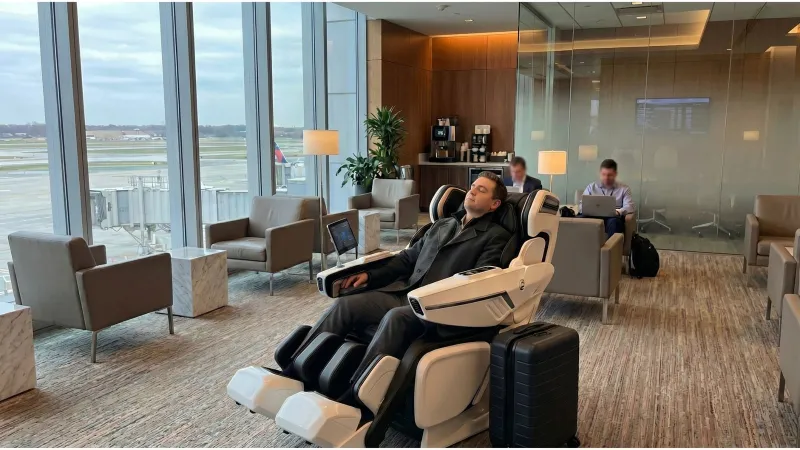
Photo: traveler relaxing massage spa after long flight airport wellness, via 360massage.com
Every frequent flyer has a jet lag ritual. The melatonin at 9 p.m. destination time. The hydration schedule. The strategic caffeine cutoff. The sleep mask, the magnesium, the increasingly elaborate supplement stack that turns a carry-on into a traveling pharmacy.
And yet: we're all still wrecked.
Practitioners in Sikkim — a region that has hosted exhausted long-distance travelers, pilgrims, and traders crossing the Himalayas for centuries — look at the American approach and see a category error. Jet lag, in their view, isn't primarily a sleep problem. It's a circulation and energy problem, and sleep is just one of the systems downstream of it. Which means the fix isn't a pill. It's hands.
The Sikkimese Frame: Fatigue Lives in the Body, Not Just the Brain
Western jet lag advice is almost entirely about the brain: shift your circadian rhythm, get light exposure, take melatonin to nudge the clock. All valid. But talk to a Sikkimese bodywork practitioner and you'll hear a different diagnosis of the same misery.
Their argument, in essence: long-haul travel stagnates the body. Hours of compression, dehydration, altitude changes, and disrupted eating slow circulation, pool fluid in the lower limbs, and leave the body's energy — what many traditions across Asia call by various names and Americans might cautiously call 'flow' — moving sluggishly. The disrupted sleep is a symptom of a body that hasn't resumed moving properly, not the disease itself.
So the traditional response to a long journey isn't 'rest until the clock resets.' It's bodywork — often within a day of arrival — to move the stagnation out, restore circulation, and let sleep follow rather than force it.
What the Science Actually Says (Spoiler: Not Much, But It Leans Interesting)
Here's the honest part: research on massage for jet lag specifically is thin. There's no landmark study you can cite at a dinner party. But the adjacent science is more supportive than skeptics might expect.
Massage therapy has a documented effect on cortisol and on parasympathetic nervous system activity — the rest-and-digest state that governs sleep quality. Studies on massage and sleep quality in general populations show consistent improvements. And the circadian literature increasingly recognizes that physical cues — meal timing, movement, body temperature rhythms — help entrain the body clock alongside light. A vigorous massage shifts body temperature and circulation in ways that plausibly support, rather than fight, a rhythm reset.
In other words: the mechanism Sikkimese practitioners describe — move the body, restore flow, sleep follows — is not contradicted by the science. It's just underfunded.
A Frequent Flyer's Protocol, Sikkim-Style
You don't need a flight to Gangtok to try this. Here's the approach, adapted for a New York–to–somewhere-far itinerary:
On the plane: move before you sleep. The Sikkimese instinct — stagnation is the enemy — translates directly to aisle laps, ankle circles, and calf work. Every hour. Yes, everyone stares. Your calves don't care.
Within 24 hours of landing: get bodywork. Ideally a full session focused on circulation — long draining strokes toward the heart, real attention to the legs and feet, work through the shoulders and neck where travel tension parks itself. If you can find a practitioner trained in Asian bodywork traditions, even better. If not, a competent deep-tissue or lymphatic-focused massage therapist can execute the principle.
Time it to the destination's evening if you can. A session a few hours before your intended local bedtime stacks a relaxation response on top of your melatonin window — or in place of it.
Skip the supplement escalation. This is the opinionated part, so let's own it: the American habit of treating jet lag with an ever-growing pill stack treats the body as a chemistry set when it's also a pump. Melatonin has its uses, particularly for big time-zone shifts. But the reflexive supplement escalation — melatonin plus magnesium plus the adaptogen du jour — often just adds a groggy morning to your fatigue. Try the hands-on route first. It has a better side-effect profile: you might enjoy it.
Walk, don't nap, through the first afternoon. Movement is the cheapest circulatory therapy available, and every Sikkimese practitioner will tell you the same thing: the body that moves resets fastest.
The Bigger Point
There's a philosophy underneath all this worth stealing. Sikkimese traditions tend to treat the traveler as a whole system that's been disrupted, not a sleep mechanism that's been desynchronized. That reframing matters beyond jet lag — it's the same logic behind their approach to post-trek recovery, seasonal fatigue, and chronic stress. When the system stalls, restore motion first. Let the rest follow.
So next time you land twelve time zones from home, consider spending your jet lag budget on a skilled pair of hands instead of a fourth supplement. The worst case is a good massage. The best case is that the practitioners who've watched exhausted travelers stumble off the Himalayan trails for generations were onto something all along.