What Thin Air Does to Your Body — And Why It Makes Sikkim's Massages Hit Differently
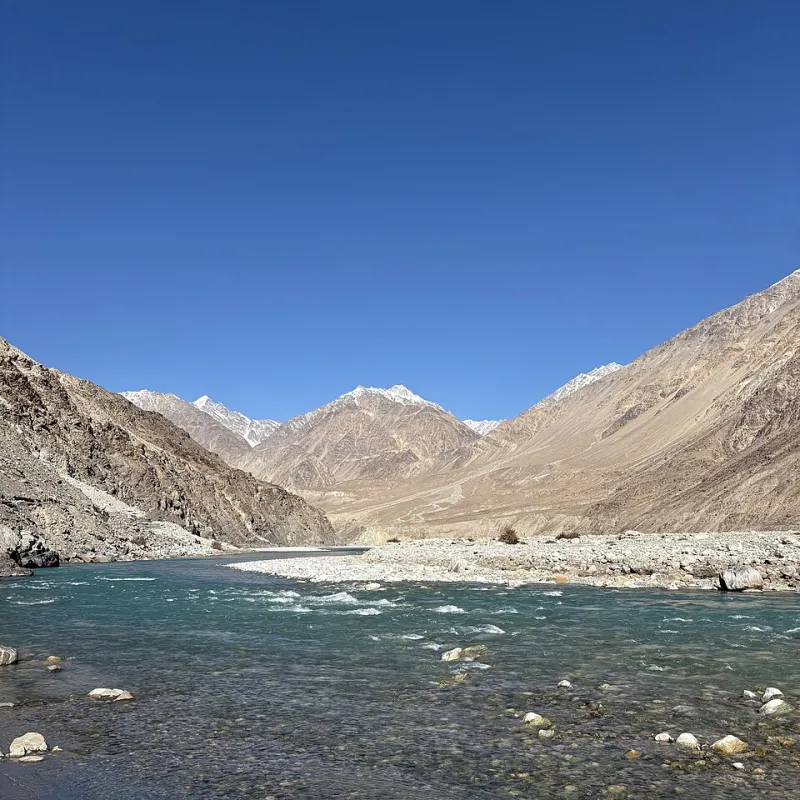
Photo: DiluteOxygen, CC BY-SA 4.0, via Wikimedia Commons
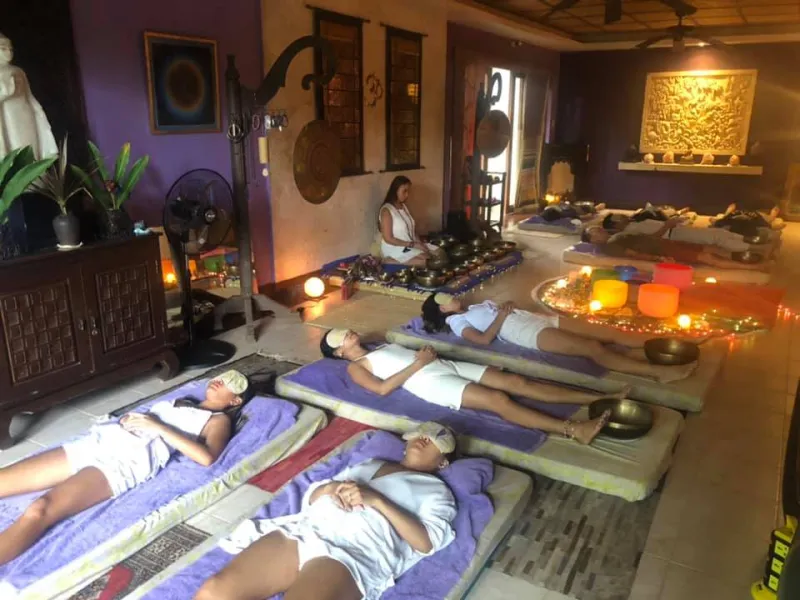
People who've traveled to Sikkim for wellness treatments often come back saying the same thing: the massages felt more intense. More effective. Like something was working at a level they hadn't experienced before. And they almost always chalk it up to the authenticity of the techniques or the quality of the practitioners — which, to be fair, are both real factors.
But there's a third variable that almost nobody talks about, and it's one that was affecting their body from the moment the plane landed: altitude.
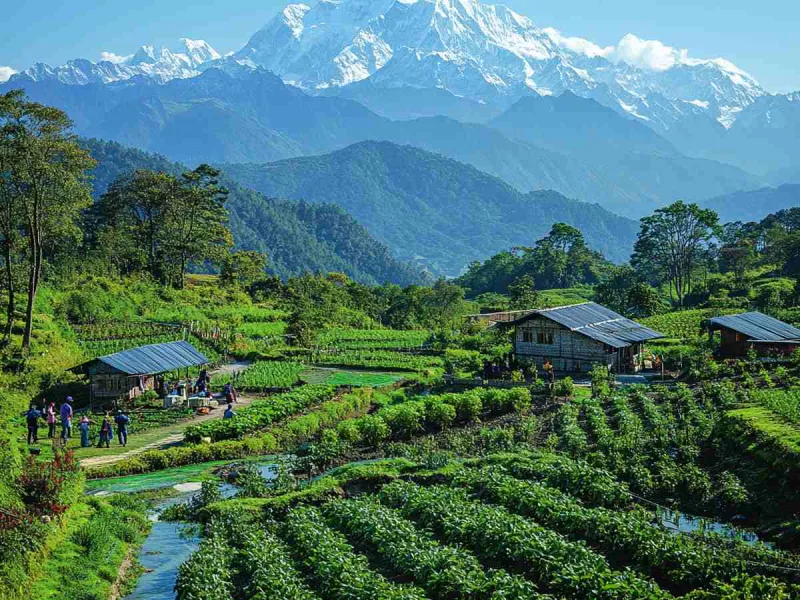
Sikkim's major towns and wellness destinations sit between roughly 5,000 and 8,000 feet above sea level. Gangtok, the state capital and a hub for therapeutic retreats, sits at around 5,500 feet. That's higher than Denver — the city Americans have long used as the benchmark for "high altitude" — and considerably higher than the sea-level or low-elevation environments where most US wellness seekers live and receive bodywork.
The physiological changes that happen at elevation aren't dramatic enough to make you feel sick (unless you push much higher, into true alpine territory). But they're significant enough to change how your body receives a massage in ways that are genuinely measurable.
Your Circulatory System at Altitude: A Quick Primer
At higher elevations, the air contains the same percentage of oxygen as at sea level — but the lower atmospheric pressure means each breath delivers fewer oxygen molecules to your lungs. Your body responds to this almost immediately.
Heart rate increases slightly. Breathing deepens. And crucially, your blood vessels dilate to improve oxygen delivery to tissues throughout the body. This vasodilation — the widening of blood vessels — is one of the core physiological reasons massage feels different in Sikkim than it does in, say, a spa in suburban Chicago.
When your circulatory system is already in a more open, dilated state, massage techniques that work by enhancing blood flow have a dramatically amplified starting point. The therapist isn't working against resting vascular tone the way they would at sea level. The pathways are already more open. The response is faster, and the circulatory benefits — reduced muscle tension, accelerated removal of metabolic waste products, improved tissue oxygenation — arrive more efficiently.
For clients, this often translates to that feeling of the massage "going deeper" without the therapist applying more pressure. It's not a placebo. It's physiology.
Muscle Response and Tissue Receptivity
Altitude also affects how muscles behave under sustained contact. At elevation, muscle tissue tends to carry a slightly higher baseline level of tension as the body works harder to maintain core temperature and support respiratory effort. This sounds counterproductive — why would tighter muscles respond better to massage?
The answer lies in what happens when that tension is released. Muscles that have been working slightly harder are also more metabolically active, which means they respond more dramatically when a therapist introduces techniques that interrupt that holding pattern. The contrast between the pre-massage state and the post-release state is more pronounced. You feel the shift more clearly.
This is also why recovery from physical activity tends to feel more satisfying at altitude when combined with bodywork. The body has more to release, and the circulatory conditions to release it efficiently are already in place.
The Botanicals Grown at Elevation: Why They're Not Interchangeable
Here's where the altitude story intersects with Sikkim's herbal traditions — and why this matters specifically for the therapeutic oils and preparations used in these treatments.
Plants grown at high altitude face environmental stressors that lowland plants simply don't encounter: intense UV radiation, temperature swings, lower oxygen availability, and thinner, mineral-rich soils. In response, many botanical species produce significantly higher concentrations of the secondary metabolites — the active compounds — that make them therapeutically valuable.
Sikkim's elevation gives rise to herbs and medicinal plants whose potency often outstrips their lowland counterparts of the same species. Ingredients like high-altitude juniper, mountain-grown turmeric varieties, and Himalayan herbs used in traditional oil preparations carry a density of active compounds that reflects their growing conditions.
When these preparations are applied topically during a massage — to skin that is already more receptive due to altitude-driven vasodilation — the absorption dynamics shift. More of the active compounds reach the underlying tissue. The therapeutic effect of the oil becomes part of the massage's overall impact, rather than sitting primarily on the skin's surface.
For American clients purchasing Sikkim-sourced oils to use at home, this is worth understanding: the oil itself retains its elevated potency, but your body's baseline receptivity at sea level is different. That doesn't make the oils less valuable — it just means the application context matters.
Replicating the Altitude Advantage at Home
You're probably not going to relocate to the Himalayas. But there are practical, evidence-adjacent strategies for nudging your body toward a more receptive state before and during massage — strategies that draw on what altitude physiology teaches us.
Warmth before contact. One of altitude's effects — vasodilation — can be partially replicated through heat. A warm bath or shower before a massage session opens blood vessels and increases tissue receptivity in ways that parallel what elevation does naturally. This isn't a new idea, but understanding the mechanism makes it feel less like a luxury and more like a preparation protocol.
Breathwork as a pre-massage primer. Controlled breathing exercises that emphasize extended exhales activate the parasympathetic nervous system and can shift vascular tone in ways that improve tissue receptivity. Even five minutes of intentional diaphragmatic breathing before a session changes your body's baseline state in measurable ways. Some practitioners in Sikkim's traditions incorporate specific breathing sequences into session openings for exactly this reason.
Strategic use of altitude-sourced botanicals. If you're incorporating Sikkim-derived oils or herbal preparations into your home recovery routine, apply them after heat exposure — post-shower, or with a warm compress on the target area — to optimize absorption. The warmth mimics some of the vasodilatory effects that altitude provides naturally.
Hydration that accounts for the work. At altitude, the body loses water more rapidly through respiration and increased circulatory activity. This affects tissue pliability in ways that directly impact massage outcomes. At home, arriving at a session well-hydrated — and rehydrating intentionally afterward — supports the same tissue responsiveness that altitude environments facilitate through their own mechanisms.
Bringing the Mountain Into Your Practice
None of this is about chasing an experience that can only happen in Sikkim. It's about understanding what makes those experiences work at a physiological level — and using that understanding to make smarter choices about your own wellness routine, wherever you happen to live.
The altitude is doing something real when you're in those mountains. The botanicals carry that elevation's influence even when they travel. And the knowledge that underlies Sikkim's therapeutic traditions was developed, in part, by practitioners who understood how their geography shaped their healing tools.
At Bikkima Wellness, we think that knowledge belongs in your hands too — not locked behind a 20-hour flight. Use it.