How to Tell If Your 'Himalayan' Massage Oil Is the Real Deal — Or Just Clever Packaging
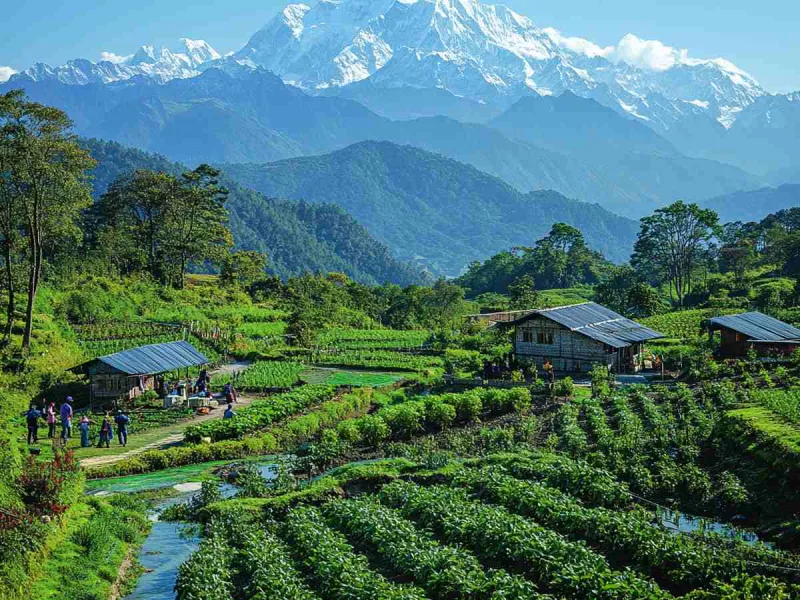
Photo: Shixart1985, CC BY 2.0, via Wikimedia Commons
Walk down the wellness aisle of any major US retailer right now and you'll find no shortage of products sporting words like Himalayan, high-altitude, or ancient Sikkimese formula. The branding is beautiful. The price points are premium. And in a distressing number of cases, the actual contents have about as much connection to the Sikkim region as a bottle of olive oil has to ancient Rome.
This isn't just a consumer frustration issue. It's a supply chain problem, an authenticity problem, and — for the communities who have been sustainably harvesting these botanicals for generations — an economic justice problem.
So let's talk about what genuine Sikkimese massage oils actually are, why they're worth the attention they're getting, and how to protect yourself (and support the real thing) the next time you're shopping.
Why Sikkim's Botanicals Are Genuinely Different
Sikkim is one of the most biodiverse regions on Earth, which sounds like marketing copy but is actually a verifiable ecological fact. The state spans multiple climate zones within a remarkably compressed geographic area — from subtropical foothills to alpine meadows above 14,000 feet. That compression means an extraordinary concentration of plant species, many of which exist nowhere else and have evolved highly specific chemical profiles in response to intense UV exposure, temperature swings, and mineral-rich glacial soils.
When a plant grows at elevation under those conditions, it often produces higher concentrations of the bioactive compounds — antioxidants, anti-inflammatories, adaptogenic molecules — that make it therapeutically interesting in the first place. Altitude stress, counterintuitively, tends to make certain plants more medicinally potent.
The specific botanicals used in traditional Sikkimese massage oils include ingredients like Rhododendron anthopogon (a high-altitude shrub with documented anti-inflammatory properties), wild-harvested stinging nettle from upper valley elevations, and various species of medicinal Nardostachys (spikenard) that have been central to Himalayan healing traditions for centuries. These aren't interchangeable with commercially farmed versions of the same species grown at sea level in different soil conditions. The terroir matters — just like it does in wine.
What the Herbalists Actually Told Us
We connected with several traditional herbalists and therapists operating in Sikkim's Temi and Ravangla areas to get a ground-level perspective on the authenticity problem.
One herbalist, who has been foraging medicinal plants in the upper Teesta Valley for over two decades, put it plainly: "The season matters more than the plant name. If someone cannot tell you which month the flowers were harvested and at what elevation, they do not have what they are selling you."
This is a crucial point. Many of Sikkim's most valuable massage oil botanicals have extremely narrow optimal harvesting windows — sometimes as short as two to three weeks — when the plant's bioactive content peaks. Miss that window and you've got plant material, but not the therapeutic profile you're paying for.
A therapist who trained in traditional Tibetan-influenced bodywork in Gangtok added another layer: "Genuine formulas are slow. The infusion process takes weeks, sometimes months. If a company is producing at scale, they are not doing that. They are using extraction shortcuts that change the chemistry entirely."
The Foraging Calendar You Should Know About
Authentic Sikkimese botanical oils aren't produced year-round. Here's a rough guide to the harvesting seasons that matter:
Late spring (April–May): High-altitude rhododendron flowers and early-season medicinal herbs are harvested before monsoon humidity sets in. This is considered prime season for oils targeting inflammation and joint support.
Post-monsoon (October–November): After the rains, many root-based botanicals like spikenard and certain valerian relatives are at peak potency. This is the primary season for oils with sedative or deeply calming properties — the ones most commonly used in traditional stress-relief massage.
Winter (December–February): Resin-based ingredients and bark extracts are gathered during dormancy. Products claiming to contain genuine winter-harvest components should be able to speak to this specifically.
If a supplier cannot tell you which season their key ingredients were harvested, that's a significant red flag.
Your Practical Authentication Checklist
Here's what to actually look for when evaluating a product claiming Sikkimese or Himalayan botanical origins:
1. Specific ingredient sourcing, not vague geographic claims. Phrases like "Himalayan botanicals" or "inspired by ancient Sikkim traditions" are marketing language, not sourcing information. Legitimate products should be able to name specific plant species (ideally with Latin names), harvesting regions, and seasonal windows.
2. Small-batch or limited-run production. Because the harvesting windows are narrow and sustainable wild-foraging is inherently limited in volume, authentic products are rarely mass-produced. If a company is selling a "Sikkimese" oil in a format that's available at major chain retailers nationwide, ask hard questions about scale.
3. Carrier oil integrity. Traditional Sikkimese formulas typically use base oils that are themselves regionally significant — cold-pressed mustard oil, sesame, or occasionally apricot kernel from Himalayan orchards. If the base is generic fractionated coconut oil or mineral oil, the "Himalayan" claim is almost certainly superficial.
4. Color, scent, and texture consistency. High-altitude botanical oils tend to have more complex, sometimes earthier scent profiles than their commercially produced counterparts. They may also have natural color variation between batches — a sign of real plant material rather than standardized extract. If every bottle smells identical and perfectly uniform, that's actually a warning sign.
5. Traceability and producer transparency. The gold standard is a product that can connect you — through documentation, a producer name, or even a QR code — back to the specific community or cooperative that harvested the ingredients. Several Sikkimese women's cooperatives and small herbal enterprises are now operating with this level of transparency. Supporting them directly is the best way to ensure both authenticity and ethical sourcing.
Why This Matters Beyond Your Massage
The counterfeit Himalayan wellness product market isn't just a personal inconvenience for American consumers — it actively harms the communities whose knowledge and labor these products are trading on. When a mass-market brand appropriates the idea of Sikkimese botanical tradition without actually sourcing from Sikkim, the economic benefit flows entirely away from the region and the people who developed that knowledge over generations.
Buying authentic isn't just about getting a better product. It's about where your wellness dollars end up and whose expertise you're actually compensating.
A Final Word on Patience
Authentic Sikkimese massage oils are not always the easiest thing to source from the US. They require a little more research, a little more patience, and often a willingness to pay a price that reflects actual sustainable harvesting and small-batch production. But once you've experienced the real thing — the complexity of scent, the way genuine high-altitude botanicals interact with skin, the knowledge that what you're using has an actual story and a specific mountain behind it — the mass-market alternatives start to feel like what they are: a very good-looking imitation of something much more interesting.